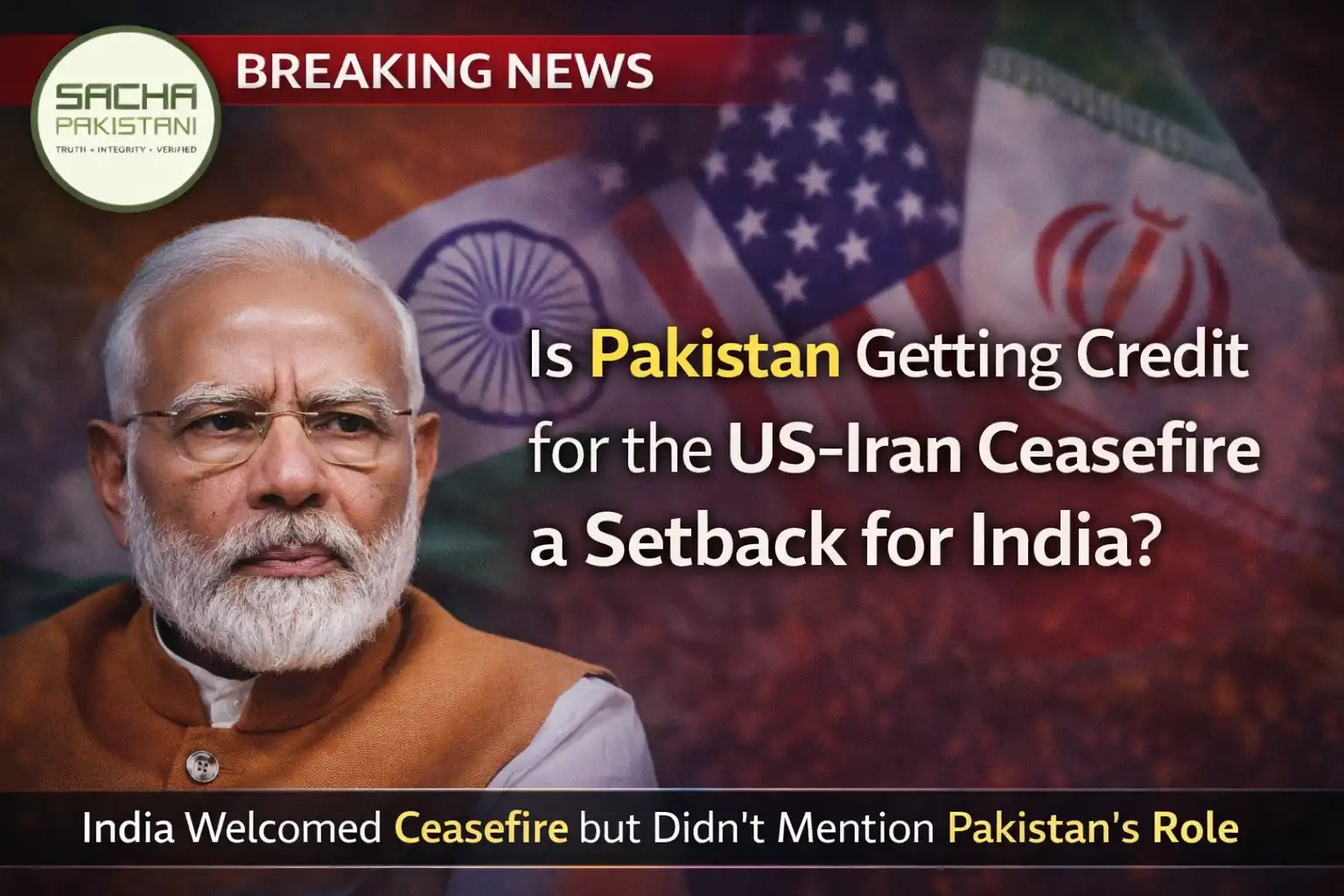
Is Pakistan Getting Credit for the Us-Iran Ceasefire a Setback for India?
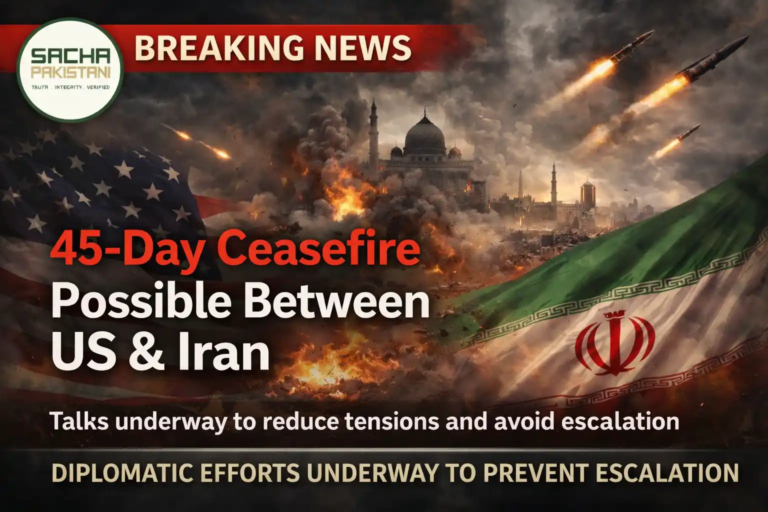
In its response, India welcomed the two-week temporary ceasefire between Iran and the United States, but the official statement issued in this regard neither named Pakistan nor praised Pakistan’s mediation efforts, unlike many countries around the world.
A statement issued by the Indian Ministry of External Affairs said, “We welcome the decision to cease fire. We hope that it will help establish lasting peace in West Asia. As we have been saying before, cease fire, dialogue and diplomacy are necessary to end the current war.”
The statement added that the tensions have “impacted global oil and energy supplies and trade systems. We hope that commercial and oil-carrying ships will now be able to pass through the Strait of Hormuz.”
While many leaders from around the world, including the UK and the European Union, have praised Pakistan’s mediation efforts over the past two days, the Indian Ministry of External Affairs has also remained silent on possible talks between Iran and the US in Islamabad and has not made any official comment on it.
It should be remembered that earlier, when Pakistan was engaged in mediation efforts during the war, a controversial statement by Indian Foreign Minister Jaishankar in this regard had graced the media.
According to Indian media, Jaishankar had said during a closed-door meeting on March 25, in the context of Pakistan’s mediation efforts, that “India does not want to become a broker country like Pakistan.”
Jaishankar said this at an all-party meeting called to clarify the government’s policies on the situation in West Asia.
During this closed-door meeting, some members of the opposition in India mentioned Pakistan’s mediation for peace talks between Iran and the United States and wanted to know from the Indian Foreign Minister whether this was a diplomatic setback for India.
The Pakistani Foreign Ministry also reacted to the Indian Foreign Minister’s statement, saying, “Such undiplomatic statements reflect deep disappointment and annoyance. Pakistan does not believe in such rhetoric and slander. Our approach is based on tolerance, decency and dignity, not mere rhetoric.”
Pakistan’s Federal Defense Minister Khawaja Asif criticized Jaishankar for one of his statements on X, saying, “Jaishankar considers himself a ‘hi-fi broker’, and his statement reflects his personal frustration.”
Question on foreign policy
Now, while on the one hand world leaders are praising Pakistan’s mediation role, on the other hand, Indian opposition parties have raised questions about India’s foreign policy regarding ‘Pakistan’s growing stature’ in international diplomacy.
Congress leader Rashid Alvi, while expressing his party’s reaction to the ceasefire, said, “India should have done what Pakistan did. But when Prime Minister Modi calls Israel ‘fatherland’, how can he talk about a ceasefire?”
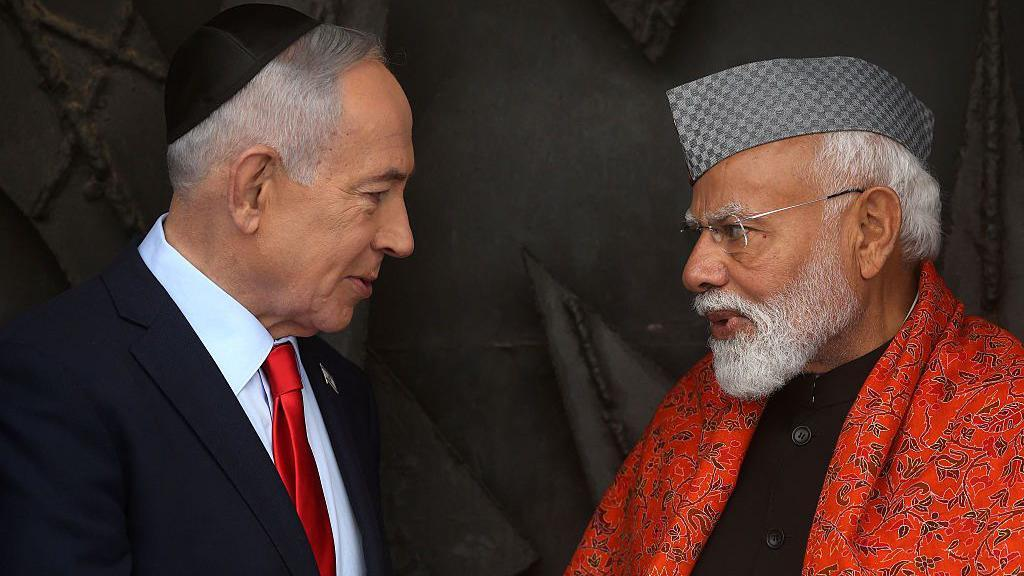
It should be remembered that the Iran war began with the attacks on Tehran by the United States and Israel on February 28. Just two days before this, Indian Prime Minister Modi had returned from his controversial visit to Israel and during this visit, he had called Israel the ‘Fatherland’ and India the ‘Motherland’, which was criticized by the Indian opposition.
The Congress party has raised questions about Prime Minister Modi’s leadership. Congress leader Jairam Ramesh wrote on X that “the role played by Pakistan and the ceasefire has dealt a big blow to Modi ji’s personal style of diplomacy.”
He further wrote that ‘The Foreign Minister (Jaishankar) had dismissed Pakistan as a ‘broker’. But now the self-styled world guru has been completely exposed, his self-proclaimed 56-inch chest has shrunk.’
However, some voices are also emerging in support of India.
Shiv Sena-UBT leader Priyanka Chaturvedi questioned X, “Why should India be at the negotiating table between the US and Iran? This criticism is incomprehensible, because this was not our fight. For Pakistan, it is like a tortoise taking money and saying that it will resolve the crisis, as the Indian Foreign Minister told (political leaders) in a good manner in the all-party meeting.”
Has Pakistan gained an advantage over India on the diplomatic front in the Iran-Iran war?
- The general opinion in the opposition party about this is the one we mentioned above.
- But Indian analysts have mixed opinions.
- International affairs expert Harsh Pant calls this ‘short-term diplomacy’.
Speaking to the BBC, he said, “Pakistan has played a role in this conflict by exchanging messages. It does not appear to have any identity or any responsibility that could influence the outcome, as a mediator does. What the final outcome of this mediation will be is not yet known. However, it is certain that Pakistan tried to mediate between the two countries through the exchange of messages, which made the ceasefire possible.”
According to him, “There is also a question as to why Pakistan is doing this. In fact, ever since Operation Sindoor (India’s military action against Pakistan in May 2025), Pakistan has been trying to get closer to the US. Pakistan supported Trump being awarded the Nobel Peace Prize.”
“When the Pakistani field marshal went to the US, Pakistan talked about rare earth minerals. Pakistan is constantly trying to increase its role in US foreign policy, which was very limited before. The current mediation efforts should be seen in this context.”
Former Foreign Secretary Nirupama Menon Rao wrote in a lengthy post on ‘X’ that ‘Pakistan’s role has emerged not as a mediator, but as a medium through which messages were conveyed and a small diplomatic channel opened.’
Like analyst Harsh Pant, Nirupama Rao believes that ‘it is not yet mediation in the traditional sense, but its importance cannot be underestimated.’
Nirupama Rao says, “India should make its position clear and support the ceasefire. It should work to secure the sea lanes and prevent any single party from dominating this war. This is not the time to remain silent, this is the time to speak sensibly and rationally.”
He further wrote that “the ceasefire resulting from the talks is proof that Pakistan enjoys the trust not only of the US and Iran but also of China. Modi wanted to isolate Pakistan globally, but on the contrary, India has become isolated itself.”
Harsh Pant says, “Pakistan has done this before. It mediated a similar thing between Russia and the US in the 1970s during the Cold War. It has done this in the past to gain importance in US foreign policy and it has succeeded in doing so.”
He says, “People forget that at one time when the Taliban government was about to be formed in Kabul, there was a lot of concern in India that India’s foreign policy had failed, but what was the result? The Taliban are talking to India today and fighting Pakistan. In fact, foreign policy should be seen as a long-term thing.”
While talking to Indian channel NDTV, Congress leader Shashi Tharoor was asked, “How is the issue being viewed in India that Pakistan is hosting ceasefire talks? Does this change the regional balance of power in any way? And should we (India) be concerned about it?”
Responding to this, Shashi Tharoor said, “Concern? I don’t see any particular reason for it…”
He said, “When Pakistanis are working on an issue that is conducive to peace, which we (India) also desire, I think we should actually celebrate. In this context, the statement of the Indian government, welcoming peace, feels right and wise. We should view these developments with strategic restraint, a sense of regional responsibility and a new resolve.”
“And don’t forget that our role is also as the voice of the Global South.”
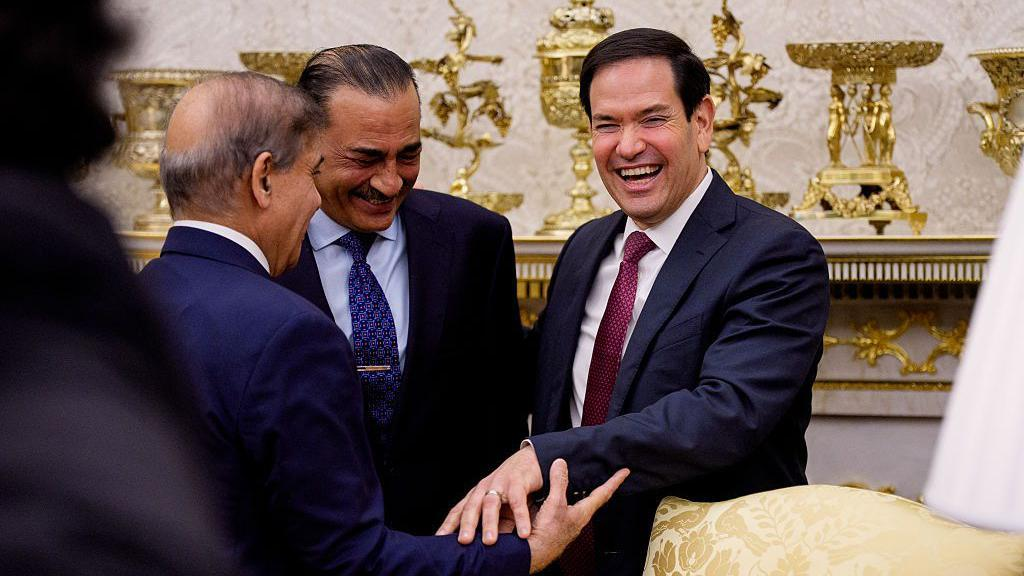
He said that Prime Minister Shehbaz Sharif’s tweet also gave the impression that the US may have tried to moderate the ceasefire by presenting Pakistan as a mere neutral party, so that the US and Iran could de-escalate tensions without directly retaliating against each other. ‘In other words, Pakistan may not be a true peacemaker but a diplomatic fig leaf for the US,’ he said.
“Therefore, we should not immediately conclude that Pakistan has achieved some extraordinary diplomatic success. However, it is also impossible to deny the fact that Pakistan’s involvement in this process has a special significance for Islamabad itself, and this role should be respected,” he said.
He added, “We have all seen the special relationship between President Trump and Pakistan’s military leadership, especially his favorite Field Marshal Asim Munir. It is also clear that on many occasions direct contacts were established, bypassing traditional diplomatic channels.”
“In addition, Pakistan is Iran’s neighbor and the two share a border of about 900 kilometers. And if a major war were to break out in the region, its effects would definitely reach Pakistan, especially in the form of refugees. Moreover, Pakistan has a Shia population of about 40 million, which could be severely affected by this conflict.”
“That is why it is understandable that Pakistan is particularly interested in ceasefire efforts in this matter.”
“This is not a defeat for us (India) in any case, because Pakistan has some unique capabilities and geographical advantages that no one else has. They should be allowed to operate in this sphere. We should look at this whole process as an interested neighbor, not as a critic or aggrieved country. There is no point in us wishing for the failure of any peace process,” he said.
He further said, “The real goal is regional security. If tensions in the Iran-Iraq war situation are reduced, then the energy market will stabilize and Indian interests will be protected. Then why do we need to object or criticize it?”
‘Indian foreign policy was very cautious’
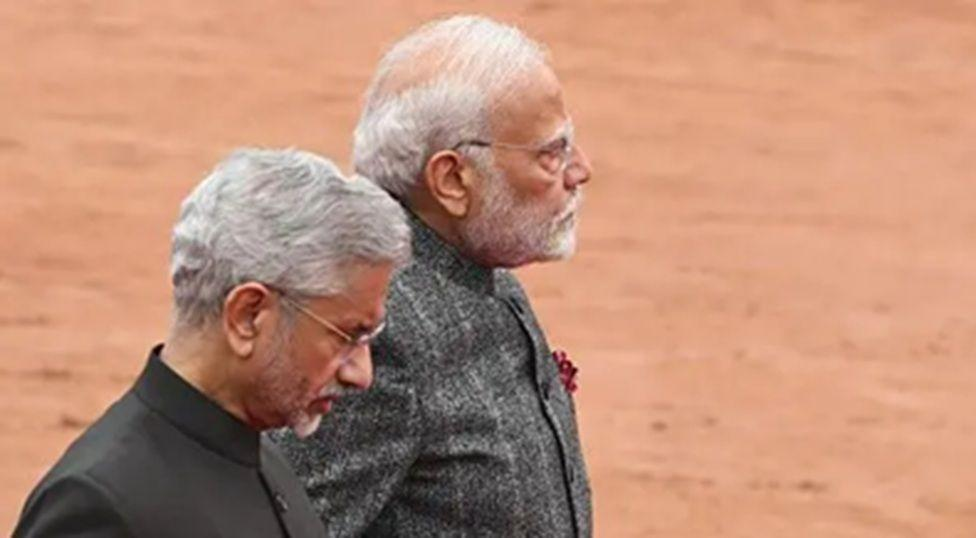
Many experts in international politics say that India has been very cautious in this war.
Speaking on a BBC podcast program, BBC Hindi Editor Nitin Srivastava said that a major reason for this is the trade agreement with the US.
He said, “When the war between Iran and the US-Israel started, India’s diplomacy was at a very critical stage because India had been negotiating tariffs with the US for a long time and was entangled in it. There were many complications in it. First, the tariff was 25 percent, then an additional 25 percent tariff was imposed on oil from Russia.”
He said, “India’s relations with Iran have been very good at the public level. There is also a big import-export business between India and Iran, many things are exported from India to Iran, including basmati rice. On the other hand, many things are coming from Iran, such as minerals, there is also talk of gas pipelines, in which India invests a lot.”
It should be remembered that even after the death of Ayatollah Seyyed Ali Khamenei in an American and Israeli attack, the Indian government initially remained silent, and after waiting for a few days, a representative of the Indian Ministry of External Affairs went to the Iranian embassy in New Delhi and wrote his comments on the condolence letter.
India has been saying in its official statements on this issue from the beginning that the war should stop, but it has not played any role in this war beyond that.
Nitin Shrivastava says, “As far as India’s foreign policy is concerned, two weeks before the ceasefire was announced, India’s oil tankers were brought to India through the Strait of Hormuz after talks with Iran and with their consent.”
According to him, in this regard, India’s foreign policy has shown considerable restraint and has achieved considerable success.