Facebook Cracks Down on Copycats: Original Creators Set to Earn More as Meta Tightens Rules
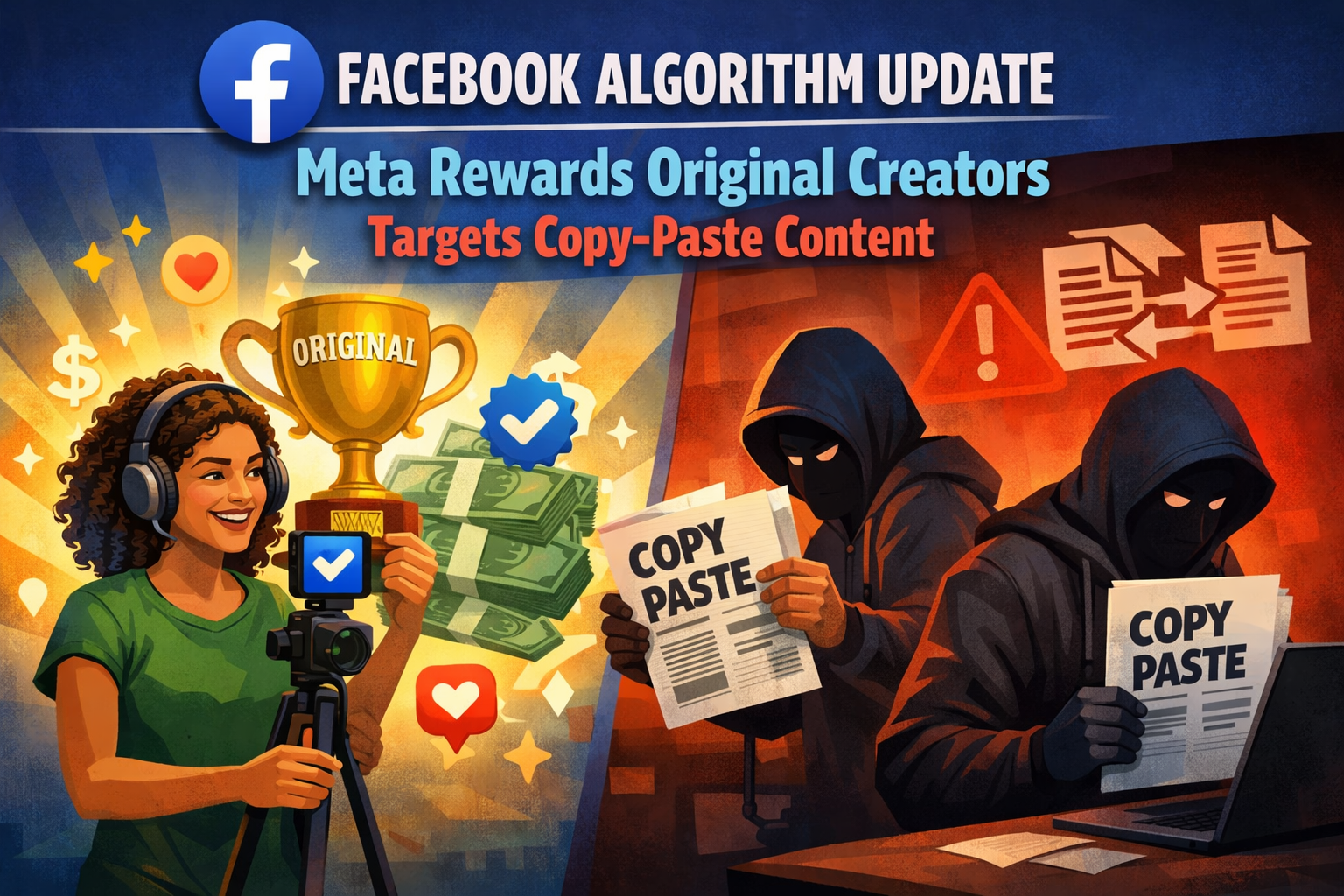
During the last year, Meta has prioritized Facebook Feed and Reels increasing relevance by spam content and copycats/ impersonation creators. Now, Meta has an update on this initiative and how original content creators get paid on Facebook.
Meta has prioritized Facebook Feed and Reels increasing relevance
Original content creators, Facebook offers revisions on terms of service for original content. Facebook has improved the reporting process for impersonation, and bracketed content control, follower growth, and the Facebook experience for everyone. The rating system control has improved experience and Facebook goals.
Greater View Count, Higher Pay, and No Copycats
Facebook has measures reserved for original content focused on Facebook Feed and Reels. Original Reels content creators experienced an increase of almost 100% in both viewing and engagement. Original content creators make an increased revenue share. Facebook continues to invest its budget in content sharing across Feed and Reels.
In 2025, Facebook leaves no stone unturned in its impersonation policy. Facebook, in 2025, removed 20 million impersonation accounts of large content creators. Impersonation accounts of large content creators experienced a 33% decrease.
New Content Regulations for Original Content
Facebook has recently changed its content regulations, which specify what types of content can be classified as original. This change has been introduced to specify what content is rewarding, what is of good quality, and what should be shown more in recommendations. With this in mind, keep in mind the following:
Content that is filmed and produced by a creator or the owner of a profile/page, is original content to Facebook.
In addition, the use of minor inactions in the set of posts of another creator, or in the previously created collaborative posts of the same profile or page creators, or in the posts, is in the presence of a creative content creator, and is a set of creative posts is acting to and unedited content co to to unedited pos are presence content of original posts, purpose, and to recont content of of original unedited posts.
Teams of creators that use and work do and apply posts to be of a presence and use unoriginal posts and unedited are postsuncreate, or unoriginal are and will work but creative and unoriginal be presence of languarts, and for loss are original.
Facebook is aware of multiple challenges regarding its potential enforcement of alleged creator faux originality and copyright infringement. Many creators have the opportunity to learn more about the Facebook appeals process.
Reporting Potential Impersonation
Not only is Facebook attempting to support original content on its platform, but it is also focused on designing and implementing new features allowing content creators to protect and expand their content.
Since last year, Facebook has been able to protect and enforce original content, specifically Facebook reels, and enable creators to take actions when reels are identically matched across the Facebook ecosystem. Facebook is now able to test new features for the content protection tool, which includes anti-impersonation Canva and one-click reporting. Many creators with content protection are expected to be among the first to experience these features.
- Content creators are able to monitor their professional dashboard for access to protection tools and content.
- Meta appreciates and values its users’ creativity. Meta’s original content features and protection tools allow content creators to express themselves.