Pakistan Assures IMF of New Subsidy System for Electricity Consumers
Pakistan has pledged to the IMF the implementation of a new targeted system to achieve its goals. The system that we are targeting includes a new.
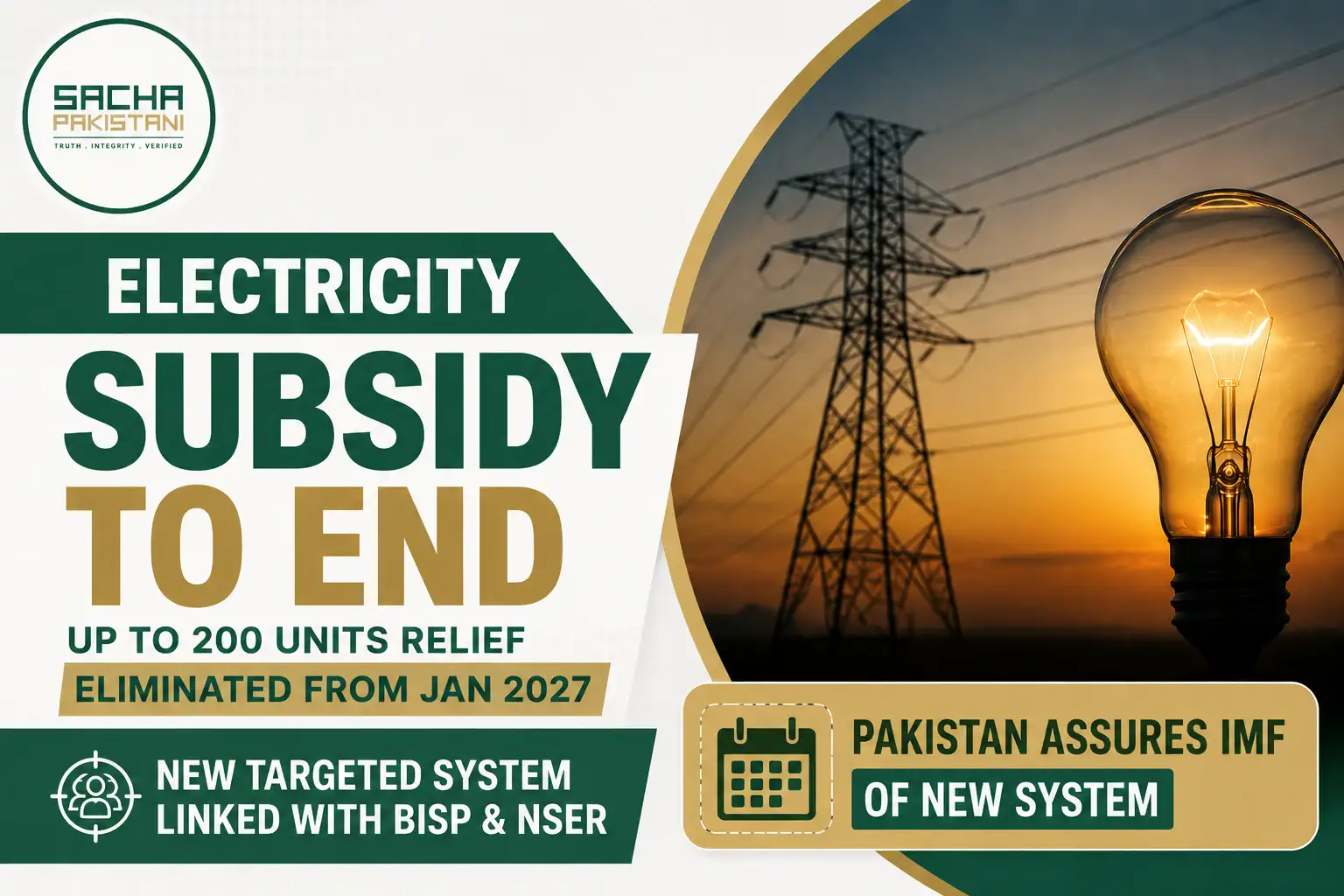
Pakistan has formally informed the International Monetary Fund (IMF) that the current subsidy system for consumers will be transitioned to a targeted system by January 2027. Currently, the subsidy system pays for subsidies on the amount of electricity the consumer uses. For consumers of only upto 200 units only. The goal is to avoid misuse, enhance transparency, and channel subsidies to deserving families.
According to the sources of the government, the new subsidy will be linked with Benazir Income Support Program (BISP) and with the National Socio-Economic Registry (NSER). In this manner, the authorities will be far better placed to pinpoint low income families. The process will begin in a time span of eight months.
Pakistan’s General Electricity Subsidy System to be Scrapped.
Currently, consumers are getting subsidized rates if they consume up to 200 units of electricity. As per the officials, the current system has many loopholes that allow subsidy misuse.
In many homes, two or more electricity meters are getting installed, and the electric consumption is being split between these two meters, so that the consumption of each meter does not go above 200 units. It refers that the net metering usage is done by users multiple times even if their consumption level is higher.
A new targeted system has been proposed under the new framework to provide subsidy only to the deserving consumer financially as opposed to blanket subsidy which government wants to scrap.
BISP and NSER Data to Be Used for Verification
The new subsidy scheme will make use of the previously gathered data from the Benazir income support program and National Socio Economic Registry that have been thoroughly verified and affirmed.
Officials plan to utilize records of power consuming consumers along with their social-economic parameters to check income status of a household for beneficiaries’ selection. In their belief, fraud detection will lessen and ease iron.
Based on the source, the World Bank will support the integrated development of this system as well.
Outsourcing Subsidy Distribution Mechanism to External Firm.
As per the reports, arrangement of a transparent payment system for the targeted subsidy programme is being done by the government. The government might entrust an external firm with the design and execution of the subsidy payment system.
The allocation of subsidy has an implementation of this measure so as to prevent administrative inefficiencies as well as enhance accountability.
They claimed that a centralized and technology-driven design will assist officials in preventing revenue losses in the power sector.
Government Expands Irrigation And Water Initiatives
As part of the reform process of the electricity sector, the government plans to extend Punjab’s e-irrigation system to Sindh, K-P and Balochistan from the next fiscal year.
In addition, efforts are underway regarding irrigation water tariffs to ensure the operation and maintenance charges link with the tariffs.
Discussions are taking place in between Pakistan and IMF and because of these discussions serious economic and structural reforms are being made. There’s good chance they are.
Pakistan on the verge of IMF RSF approval.
Senior government officials say Pakistan is on the verge of receiving the second tranche of $200 million under the IMF RSF.
The IMF-designed meeting for its Executive Board members shall be held in Washington on May 8, 2026, to approve the tranche.
The government has indicated that economic reforms are due to the recent economic scenario and strain. The government took up an initiative to reform the Indian Economy and test its strength.